 Printurday
Fine Motor Printables for Preschoolers You Can Do at Home
Fine motor skills are the small movements of the hands and fingers. They are behind holding a crayon, using scissors, zipping a coat, and, later, writing. Preschoolers build these skills through all kinds of play, and printables are one easy, low-prep part of the mix.
This post covers which printables help with fine motor practice, how to set them up at home, and how to keep it fun for ages 3 to 5.
A quick note on fine motor development
Printables are a helpful tool, not the whole picture. Kids also build hand strength through play dough, building blocks, threading beads, tearing paper, and helping in the kitchen. Think of printables as one option among many. If you have concerns about your child’s development, your pediatrician or an occupational therapist is the right person to ask.
Printable activities that build fine motor skills
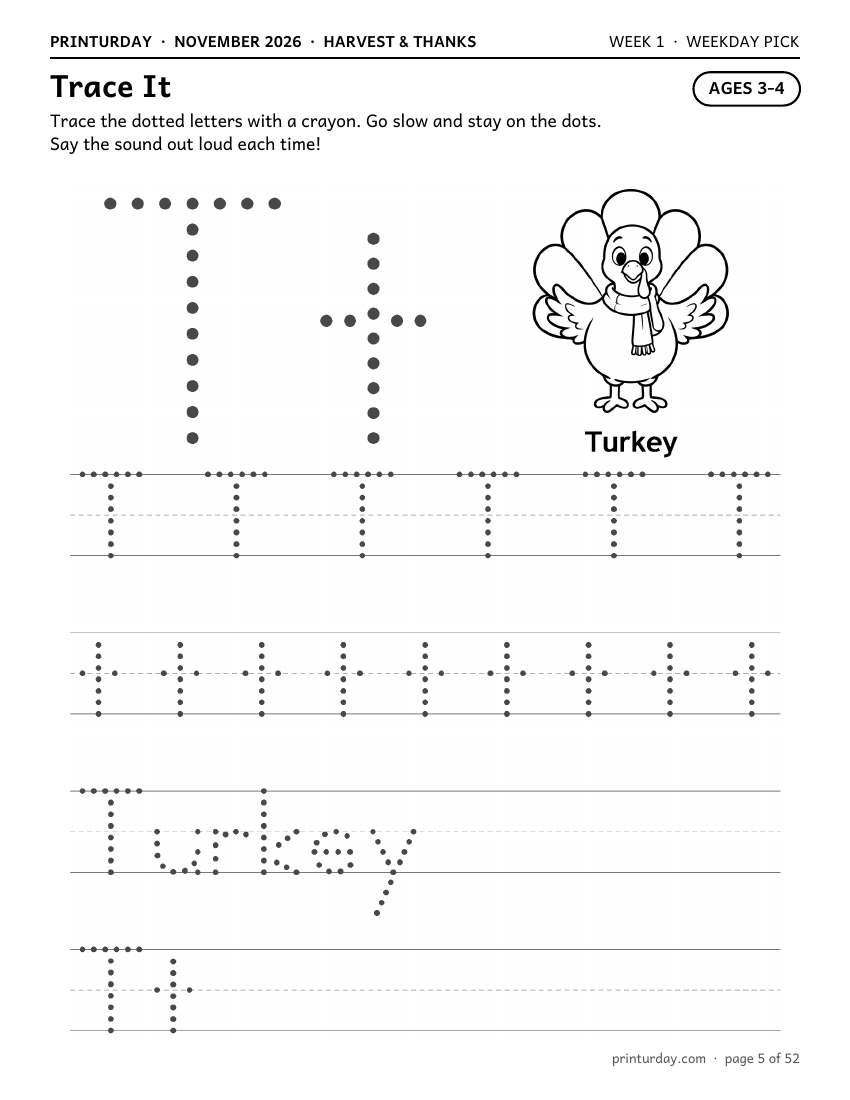
Tracing lines and shapes
Tracing straight, curved, and zigzag lines is gentle practice for pencil control. Start with thick, short lines and move to longer ones.
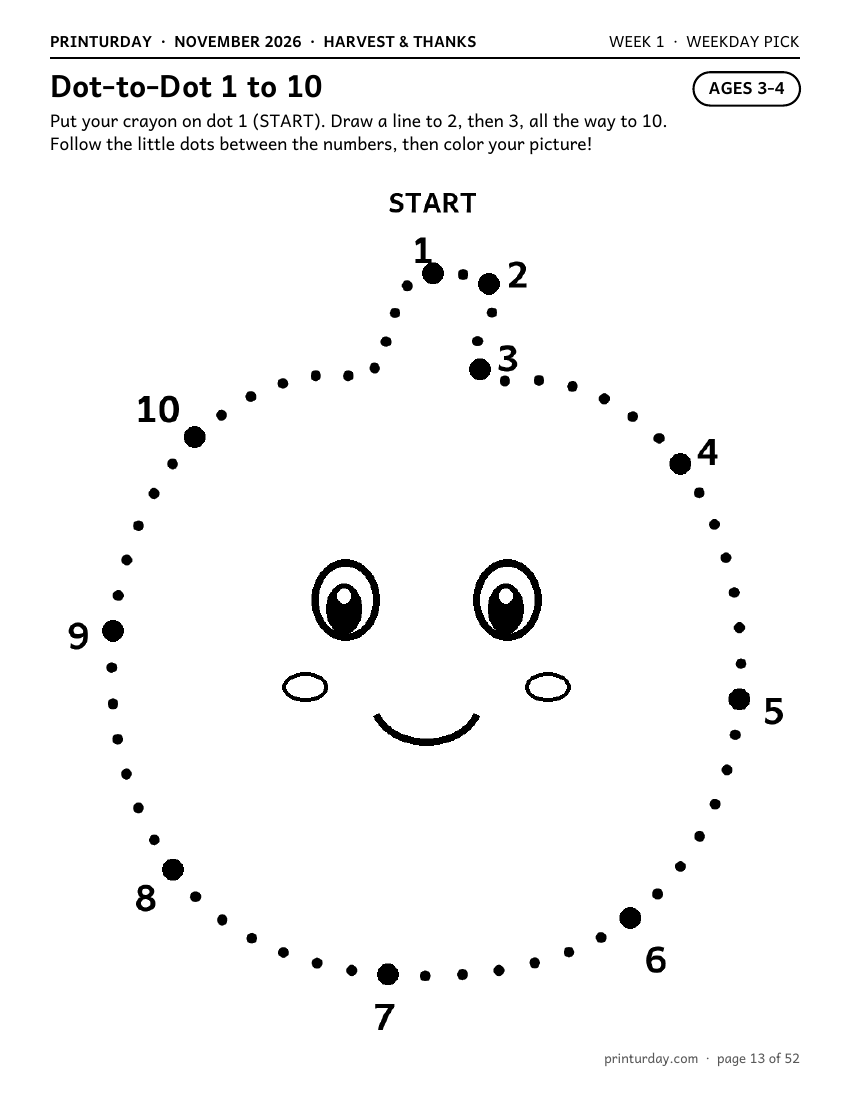
Dot-to-dot tracing
Connecting dots in order builds control and number awareness at the same time. For young kids, look for dot-to-dot pages with a dotted guide line to follow.
Cutting practice
Cutting is one of the best hand-strengthening activities there is. Start with short, straight snips, then move to longer lines and curves. Always use child-safe scissors and sit nearby.
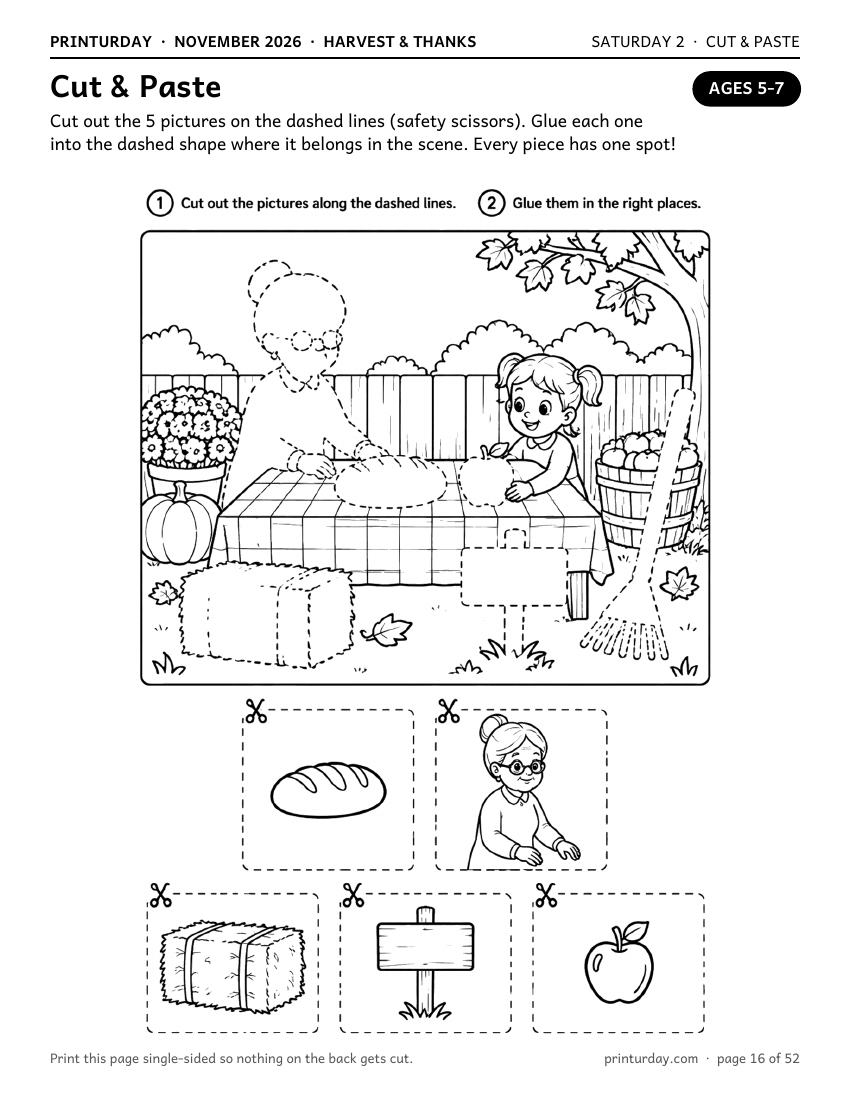
Cut and paste
Cutting out pieces and gluing them onto a scene adds a reason to cut carefully. Kids love seeing the finished picture.
Mazes
Following a maze path with a crayon takes control and focus. Wide paths are best for 3 year olds.
Coloring
Coloring inside large shapes is quiet, open-ended fine motor practice. Smaller crayons, or broken crayon pieces, can encourage a better grip.
Setting up fine motor time at home
A few simple habits make this easier:
- Pick one or two pages, not a whole stack.
- Choose the right tools. Chunky crayons for younger kids, a thick pencil for older ones, and child-safe scissors.
- Sit at a table with feet supported if possible. A stable seat helps hand control.
- Show, then step back. Demonstrate once, then let them try.
- Keep it short. Five to fifteen minutes is plenty for most preschoolers.
Signs a page is the right level
- Your child can start without help after you show them once.
- They stay with it for a few minutes.
- They are a little challenged but not frustrated.
If a page causes tears, put it away and try an easier one. If they finish in thirty seconds, try something a little harder next time.
Making it fun, not a drill
Fine motor practice should feel like play. Some ideas:
- Turn a tracing page into a story: “Help the leaf blow across the yard.”
- Use a fun tool, like a dot marker or a glitter crayon.
- Let them color the page after tracing it.
- Mix in non-paper play the same day, like play dough or stickers.
Fine motor at two levels
Printurday packs have two lanes. The 3-4 lane focuses on tracing lines, short mazes, shadow match, and cut and paste with big pieces. The 5-7 lane adds tracing words, longer mazes, and color by number, which keep building control as kids grow.
Printing tips
- Use plain US Letter paper for tracing and mazes.
- Print in grayscale. Line art looks fine in black and white.
- Print at actual size so tracing lines stay the right thickness.
- For cutting practice, regular printer paper is easier for little hands than cardstock.
Try a free sample
Request the free Printurday sample
The free sample is the easiest way to try Printurday pages at home before subscribing.
Try Printurday
Start with the free sample and see how your preschooler does. If it is a good fit, the full monthly pack is $6 a month, cancel anytime. You get one 52-page US Letter PDF each month that prints fine in grayscale, with tracing, mazes, cutting, and coloring in a 3-4 lane and a 5-7 lane. November is Harvest & Thanks.